


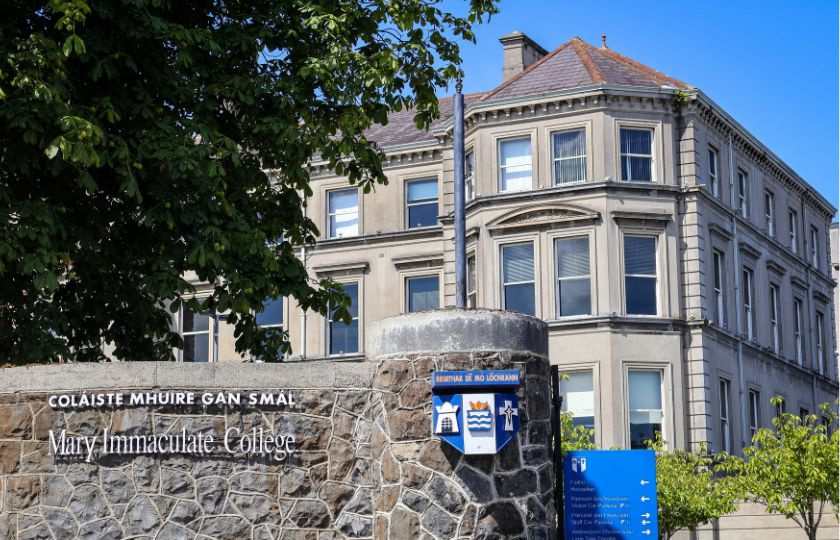
Mary Immaculate College (MIC) has been formally designated a University of Sanctuary by the University of Sanctuary Ireland Steering Committee, recognising the College’s sustained commitment to fostering a culture of welcome, inclusion and opportunity for people seeking refuge.
Universities of Sanctuary is an initiative of the City of Sanctuary movement, which began in 2005: it celebrates the good practice of universities welcoming sanctuary seekers into their communities and fostering a culture of welcome and inclusion for all. A University of Sanctuary should be a place where anyone can feel safe, welcome and able to pursue their right to education.
MIC’s successful designation follows a comprehensive evaluation process and reflects the embedding of sanctuary principles across MIC’s governance, strategy, teaching, research and community engagement activities.
In formally confirming the designation, Dr Ruth Hally, Co-Chair of University of Sanctuary Ireland, noted the strength and impact of MIC’s application:
“The University of Sanctuary Ireland accreditation sub-committee was most impressed by Mary Immaculate College’s application. The Committee noted that the principles of sanctuary are very clearly embedded in the College, that they are enthusiastically supported by the executive management team and that you have engaged in capacity building among staff. The Committee commended, in particular, the commitment to scholarships for people in the international protection process… it is axiomatic that this programme will truly enhance the lives of those fortunate enough to benefit from it.”
The Committee further recognised MIC’s leadership in advancing inclusive practice across the higher education sector, referencing its scholarships, community partnerships, teaching initiatives, and the establishment of dedicated structures such as the Race Equality and University of Sanctuary Hub
MIC’s designation reflects a long-standing, institution-wide approach to advancing equality, diversity, inclusion and interculturalism (EDII). Sanctuary is embedded as a core pillar of the College’s Strategic Plan, Pathways Lit, Futures Found, which positions MIC as a values-led institution committed to human dignity, social justice and education as a public good.
Through this framework, MIC has developed a comprehensive ecosystem of supports and initiatives, including:
- A University of Sanctuary Scholarship Programme, providing fee waivers, stipends, and wraparound supports for students in the international protection process
- Dedicated academic and language pathways, including pre-sessional English programmes and tailored onboarding supports
- A Race Equality and Sanctuary governance model embedded within institutional structures and oversight mechanisms
- Extensive community engagement and partnership activity, supporting integration, access and intercultural dialogue at local, regional and national levels
This holistic approach ensures that sanctuary at MIC is not a standalone initiative, but an integrated part of institutional strategy, culture and practice. The designation recognises the depth and integrity of MIC’s commitment to sanctuary as a core expression of the mission. As a values-led institution, MIC are committed to advancing human dignity, social justice and access to education as a public good.
Welcoming the designation, Professor Lorraine McIlrath, Director of Equality, Diversity, Inclusion and Interculturalism at MIC, expressed her pride in the collective achievement:
“I am absolutely delighted that Mary Immaculate College has been recognised as a University of Sanctuary. This designation reflects the deep commitment of our staff, students and partners to creating an inclusive and welcoming environment where those seeking sanctuary are supported not only to access higher education, but to flourish within it. It affirms years of collaborative work to embed sanctuary principles across teaching, research, community engagement and institutional practice, and positions MIC to continue playing a leadership role nationally in advancing equality, interculturalism and social justice.”
Professor McIlrath has also played a key leadership role nationally in advancing the University of Sanctuary movement across the higher education sector.
The designation closely aligns with MIC’s Strategic Plan 2025–2030, which commits the College to supporting vulnerable communities, responding to global challenges and fostering belonging for all learners. Through the Strategic Plan, Pathways Lit, Futures Found, MIC will continue to build on this work, strengthening supports for those seeking refuge, deepening partnerships, and ensuring that it remains a place where all can belong, learn and thrive.
Congratulating the EDII team on this milestone, Professor Dermot Nestor, President of MIC, said:
“MIC was founded on the conviction that education is a public good—a source of dignity, participation, and human flourishing. University of Sanctuary status holds us to that conviction. Those who come to us seeking sanctuary will not simply access higher education here; they will thrive within it and help shape the college community they join.”
In his endorsement of the application, Professor Nestor emphasised that MIC has “moved beyond intention to implementation, and from activity to impact,” with sanctuary fully integrated into the College’s structures, policies and daily practice.
The designation of MIC as a University of Sanctuary reflects the collective efforts of staff, students, partners and the wider community. It also signals MIC’s continued commitment to advancing inclusive higher education and contributing to national and international efforts to support people seeking sanctuary.
As MIC looks to the future, the University of Sanctuary designation serves not only as recognition of progress to date, but as a platform for continued leadership, innovation and impact in building an inclusive and equitable higher education system.
For more information on MIC’s University of Sanctuary practices and supports for people seeking refuge and transition to higher education, see here.

