

STEM Integration: Virtual Reality and Life Below the Sea
STEM Integration and Sustainability
| Lecturer - Dr Michael McNamara |
|---|
| Discipline - STEM Education |
| Subject - ICT/Digital Learning |
| Levels - Postgraduate |
| Class Sizes - PME Year 2 = 73 students, M Ed with Specialism in STEM Education = 5 students |
| Mode of Delivery - In-person |
This case study examines how integrating digital technologies, particularly Virtual Reality (VR) and generative AI (GenAI), can enhance teaching and learning about Sustainable Development Goals (SDGs), focusing on SDG 4: Quality Education and SDG 14: Life Below Water. An initial integrated STEM (iSTEM) research project was undertaken with primary schools in Co Galway which resulted in pupils creating immersive VR stories to deepen their understanding of ocean conservation, generating insights and teaching resources later incorporated into PME Year 2 and M.Ed. with Specialism in STEM Education modules. Here, student teachers engaged in a structured exploration of ocean conservation, using materials from the research project to shape their thinking and produce their own VR digital content. They also considered how immersive technologies can be implemented in primary classrooms to teach about SDGs, reflecting on both pedagogical value and practical considerations.
Rationale
The implementation of new curricular strands and elements within the recently introduced Science, Technology, Engineering and Mathematics (STEM) Education Specification (DEY, 2025) presents a significant challenge for in-service and student teachers alike, particularly in implementing its proposed five-phase approach to iSTEM learning. These five phases (Identify, Refine, Plan, Implement, Evaluate), explored in depth on pages 50-55 of the STEM Education specification, offer a flexible and logical structure for teachers, and their pupils, when engaging in iSTEM activities in the primary classroom. However, as with any new curricular innovation, it is essential that quality examples of good practice be generated to support student teachers and in-service teachers in implementing this new approach effectively within their own professional practice. Additionally, although there is widespread agreement on the importance of teaching the SDGs to safeguard our planet’s health, student teachers can report uncertainty about how to translate these global concerns into meaningful classroom practice, especially when using digital technologies to achieve this aim. Students’ confidence and competence in using digital technologies can also constitute a significant challenge in supporting innovative teaching and learning, particularly in relation to newer immersive technologies such as VR and GenAI.
This case study illustrates how an iSTEM learning approach, centred on ocean conservation and supported by immersive technologies, can address these challenges collectively and effectively. It offers a real-world example of implementing the new iSTEM learning approach, practical strategies for embedding SDG-focused learning within the STEM curriculum and contributes to wider discussions on how VR, GenAI and other digital tools can foster creative, technology-enhanced learning and strengthen quality education for sustainability.
Description of the Teaching and Learning Approach
A two-phase approach was developed to create teaching resources and pedagogical strategies, aiding MIC postgraduate students to explore how digital technologies can support SDG-focused learning through an iSTEM project.
Phase 1: The Research Project
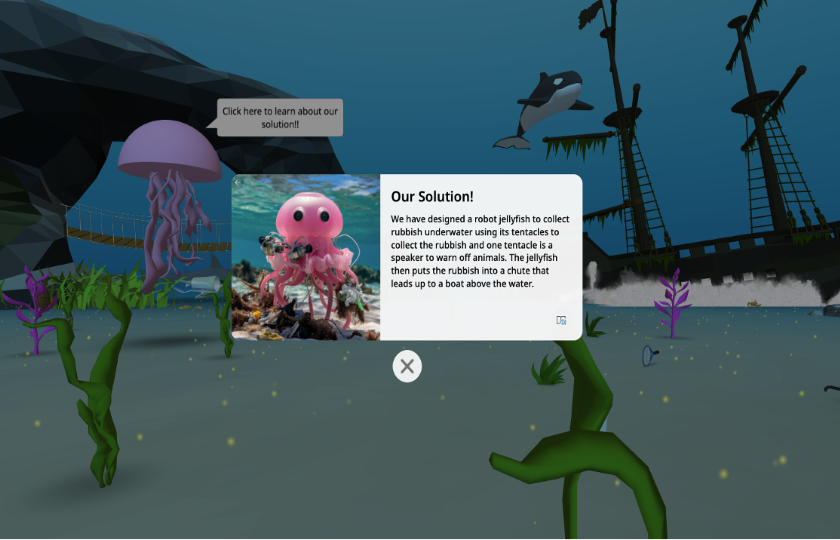
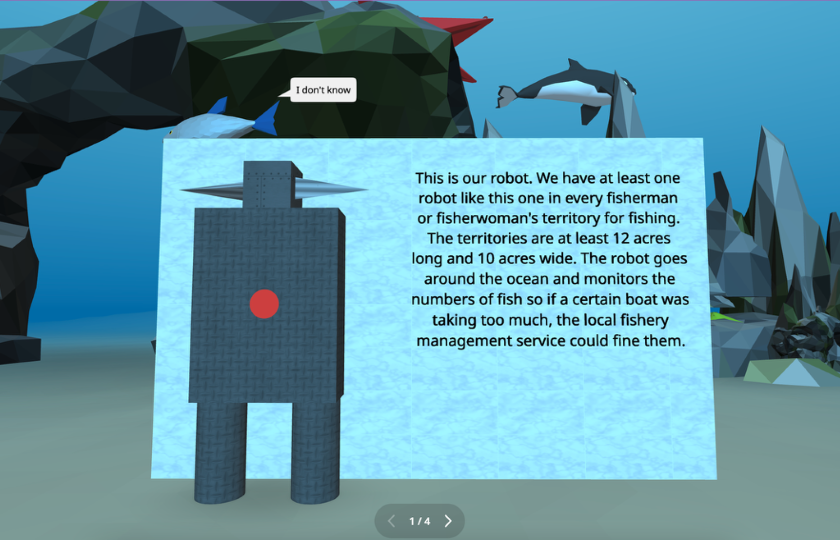
The first phase of this approach centred on a research project involving five primary schools in Co. Galway. Over 5 - 6 weeks, senior pupils investigated ocean-conservation issues. Their task was to research either plastics pollution or overfishing, devise potential solutions and communicate their learning through the creation of an interactive VR digital story.
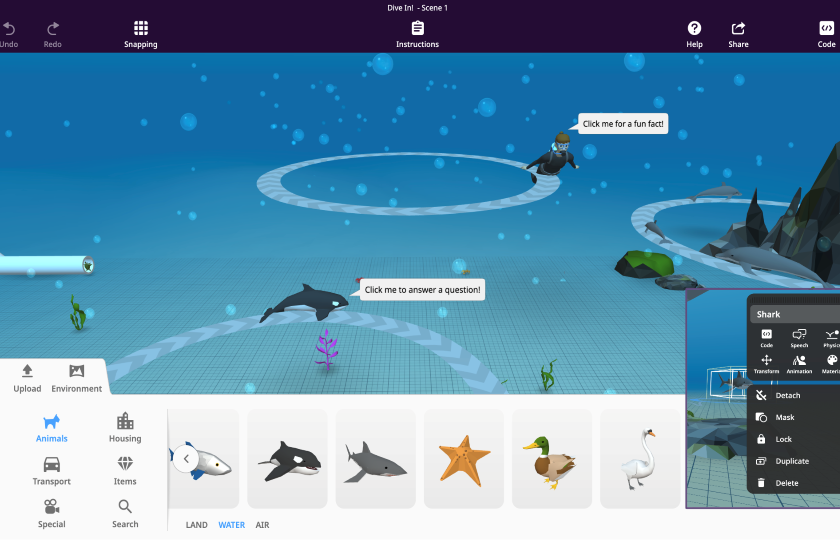
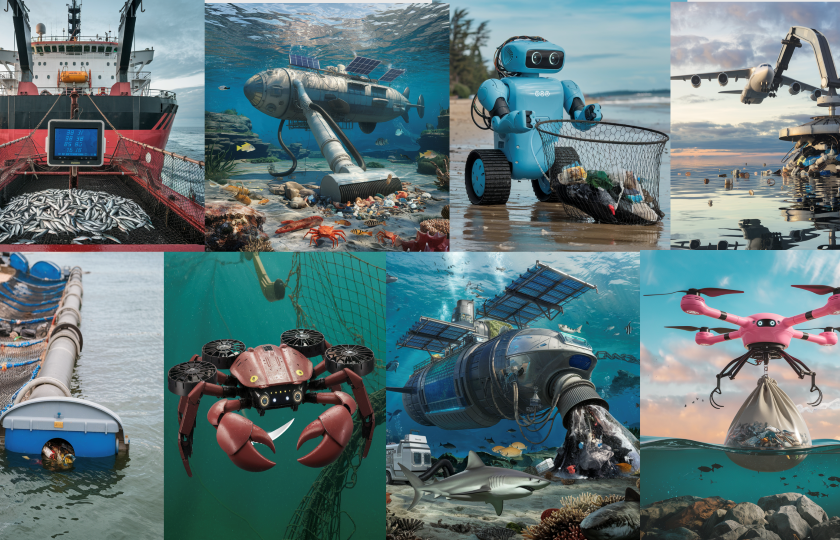
Each class was provided with a hands-on workshop at the beginning and the end of the project. During the initial visit, we discussed the five ‘steps’ to be undertaken throughout the project, aligned to the five-phase iSTEM learning approach within the new STEM curriculum. We also investigated effective online research strategies, how to plan 360-degree VR scenes, and explored how to design and code interactive environments using the Delightex platform. Ideogram AI was also demonstrated as a creative aid for visualising proposed solutions.
Between visits, pupils worked in groups to research, plan and create their VR environments, working through the five iSTEM project phases. Teaching resources were created to support pupils as they progressed through the refining, planning, implementation and evaluation steps of the project (phases 2 to 5). Here, for example, an ‘Exploring Our STEM Problem’ worksheet was developed by the researcher to enable pupils to consider their chosen ocean conservation challenge through the eyes of a scientist, technologist, engineer and mathematician. Groups work together to add questions from each perspective about the issue to understand their core challenge more holistically. This worksheet effectively supported pupils during phases 2 and 3 to refine their focus and begin to plan their proposed solution, as well as noting what sources of information would shape their thinking in this regard. A VR scene planning worksheet was also created to aid pupils in planning each scene of their VR story during phase 3, as pupils needed to consider the user experience and document what they would see above, below and all around them as they entered each scene, as well as what interactive elements they wished to include. A tutorial video was also developed, which recapped the demonstration provided during the initial workshop regarding how to use the Delightex platform. Teachers and pupils could use this tutorial as a reference point if they wished to revisit any technical or coding elements when creating their VR stories. Additionally, to support teachers between visits, along with the offer of online check-ins, a simple webpage was created which housed the teaching resources referenced above, as well as other helpful elements to support pupils during phases 3 and 4 of their iSTEM project, such as a section outlining reliable sources of information that the pupils could use when engaged in their independent research regarding their chosen issue.
During the second visit, I brought VR headsets so pupils could experience their completed stories immersively to evaluate their impact and identify where/if further improvements could be made.
Pupils’ and teachers’ learning was captured throughout. Pupils completed pre- and post-project questionnaires (n = 100) and took part in focus groups. All participating teachers (n = 5) engaged in semi-structured interviews to offer their perspectives also.
Phase 2: Development of Postgraduate Module Content
Insights from this project then directly informed the design of two practical lab sessions delivered to PME Year 2 students and the M Ed with Specialism in STEM Education cohort. Here, each stage of the five-phase iSTEM approach was explored, drawing on practical examples of pupil work from the research project, as well as researcher-developed teaching resources. To support students’ understanding and generate discussion, a visual presentation was constructed for each session which displayed each step of the project experience, as well as the resources used to support pupils’ learning at each point. For example, when discussing the planning undertaken during phase 3, completed samples of the ‘Exploring our STEM Problem’ worksheet were displayed and discussed in terms of how this resource broadened pupils’ conceptual understanding of STEM. Importantly, following an exploration of the activities undertaken during each of the project steps, a clear demonstration was then provided to outline how the technical and coding elements of the Delightex platform worked in unison to build and animate VR scenes. Upon completion of this modelling activity, students were then assigned some time to explore the platform features and to create their own VR environments using Delightex, experiencing the same design and coding challenges that pupils' encountered.
The M Ed group had the added opportunity to view their creations through VR headsets, providing a powerful sense of immersion, demonstrating how engagement, curiosity and problem-solving are deepened when learning takes on a spatial, interactive form. Throughout all sessions, findings from the school-based research were interwoven to help students understand the benefits regarding both the technical processes and the pedagogical approaches experienced when using VR and GenAI to enrich iSTEM learning about SDGs in the classroom.
What Worked And Why?
This approach to teaching and learning about SDGs proved very effective in a number of ways:
Teaching about Sustainable Development Goals: While there is, of course, agreement that SDGs should be embedded in primary education, student teachers can be unsure how to do so with clarity and purpose. The teaching and learning approach outlined in this case study offered a structured, repeatable approach that students can apply when teaching SDGs 4 and 14, and can be adapted for other SDGs in future practice, providing them with a concrete framework rather than merely suggested strategies.
Research-informed practice: Engaging in classroom-based research on immersive technologies and their potential for teaching SDGs allowed theory to be effectively translated into practice. Students could explore and evaluate how pedagogical strategies and researcher-developed resources can be incorporated in primary classrooms to explore SDGs while simultaneously developing pupils’ digital competence.
Practical application of the STEM curriculum: Framing the project around the five-phase iSTEM model in the STEM curriculum provided a real-world example of the new curriculum in action. Each phase of this learning approach was explored in depth, with additional examples discussed to broaden students’ understanding of how the process can support SDG-focused work and wider cross-curricular inquiry.
Building confidence with digital technologies: Like many practicing teachers, students often approach emerging technologies, such as VR and GenAI, with uncertainty. Hands-on opportunities to explore software, test coding functions and build VR environments created a low-stakes space for experimentation. Feedback indicated that this practical exploration significantly increased students’ confidence and their enthusiasm to integrate such tools into their future teaching.
Any Problems or Issues That Arose From This Approach?
Access to Equipment: When creating VR environments, the ideal scenario is for students to use VR headsets to fully explore and evaluate their work. The M.Ed cohort had this opportunity, as there was ample time within their extended lab session to allow for this and I was able to borrow VR headsets for this purpose. However, this was not possible for the PME sessions, resulting in only a partial VR experience. This is not to say that you must have headsets to benefit from using VR to support learning in the classroom, as tablet features such as in-built gyroscopes can enhance immersion, and students can still create and navigate their environments without headsets. However, authentic immersion is best achieved when headsets are available for learners to explore their own work.
Coding ability: A second challenge involved students’ varying levels of familiarity with coding. The Delightex platform uses block-based coding, similar to Scratch coding. Some students (and pupils) were already comfortable with this format, while others were encountering it for the first time. Clear demonstrations, guided exploration and support offered during the practical sessions ensured that all students could engage with the platform at their level and overcome initial hesitation.
Of course, it is important to note that educators (lecturers/ teachers) can have varying levels of familiarity with coding concepts and creating VR experiences also. Should an educator be interested in upskilling in this regard, the Delightex platform offers many useful supports on their website to develop the coding and technical knowledge required to create VR content. Resources include printable PDF handbooks for teachers and pupils, a free 30min online course for teachers and short video tutorials. Additionally, the video tutorial created as part of this project is a great place to start if a lecturer/teacher would like to see how dynamic and user-friendly the Delightex platform is in supporting learners to create VR digital environments using block-based coding.
Tips for Implementation
iSTEM phases are very effective: I strongly recommend the five-phase iSTEM approach for teaching about the SDGs. It proved highly effective in the classroom, guiding pupils to investigate the real-world challenges of SDG 14: Life Below Water, before using their new knowledge to design VR stories to demonstrate their learning and proposed creative solutions. Students who explored this process in their modules also responded positively, noting that the structure effectively supports engagement with SDG-related content, while still offering flexibility.
Time for exploration of digital technologies: When working with digital technologies, it is essential to provide ample time for students to experiment with the tools in a supportive environment. This constitutes a core practice within our ICT/Digital Learning modules across MIC programmes, as hands-on exploration consistently strengthens students’ confidence and competence in integrating technology meaningfully into their teaching practices.
Get Creative! When setting criteria for digital content creation, I typically include “be creative!”. This simple invitation encourages expression, enriches the work and gives digitally proficient students room to challenge their abilities too.
Reflection: The new STEM curriculum opens up exciting opportunities to embed Sustainable Development Goals meaningfully into classroom practice. The iSTEM learning approach is especially valuable, offering in-service and student teachers a clear framework for linking global issues, like ocean conservation, to creative, technology-rich educational experiences. In the practical workshops, pupils and students showed how immersive technologies such as VR and GenAI can enhance learning by fostering curiosity, creativity, problem-solving, digital competence and a deeper awareness of the subject. However, it is important to acknowledge the differing levels of digital competence among students when designing module content. Providing sufficient time for exploration with digital tools and software is essential for developing their confidence and increasing the likelihood that they will integrate these innovative technologies in their future teaching.
Future Plans: I will continue integrating teaching resources, pupil work, pedagogical approaches and key research findings from the research project, and upcoming iterations of it, into future STEM-related modules, including undergraduate programmes, to explore immersive technologies for teaching SDGs.
Building on the success of my initial research project, the ICT/Digital Learning team in MIC is now partnering with Oide to deliver this content annually, resulting in additional research in this area and expanding opportunities for teachers nationwide to implement immersive technologies and SDG-focused learning in their classrooms.
Department of Education and youth. (2025) Science, Technology, Engineering and Mathematics (STEM) Education Specification. Dublin: Stationery Office.

- STEM Integration and Sustainability